
Quick answer: Dubai property brands win AI search traffic by publishing answer-first, data-backed content on specific communities, developers and buying rules. They also add accurate structured data, show verifiable trust signals such as RERA and Trakheesi compliance, publish in both Arabic and English, and earn mentions from reputable portals and media. Strong traditional SEO remains the foundation.
A buyer in London, Mumbai or Riyadh no longer starts with ten blue links. They ask a question: “Is Dubai Marina a good area for rental yield?” or “Which developers in Dubai are the most reliable for off-plan?” The answer they read may come from a Google AI Overview, an AI Mode response, ChatGPT, Gemini or Perplexity. Your brand is either in that answer or invisible.
This guide explains how AI search works for property queries, what Dubai real estate brands should change, and how to measure results. It builds on our broader guide to how to rank in Google AI Overviews in Dubai and applies those principles to developers, brokerages, independent agents and property portals.

Why AI search matters for Dubai real estate brands
Dubai’s market is large, fast-moving and research-heavy
Dubai Land Department data shows total real estate transactions reached Dh917 billion in 2025, with roughly 270,000 transactions, both up 20% on 2024. Sheikh Mohammed has said the emirate’s goal under its Real Estate Sector Strategy 2033 is Dh1 trillion in transactions by 2033. Read the full figures in Gulf News’ report on the record 2025 results.
Off-plan sales made up the majority of activity in 2025, while resale homes saw stronger price growth per square foot. Off-plan purchases are high-value, research-intensive decisions, and buyers ask many questions before contacting anyone. Those questions are what AI search answers.
Property research has become conversational
Property buyers ask long, comparative questions, which is where Google’s AI features are strongest. Google’s documentation says AI Overviews help people grasp a complicated topic quickly and offer links to learn more, while AI Mode suits queries that need exploration, reasoning or complex comparisons. A question like “off-plan vs ready property in Dubai for a first-time investor” fits that description, and it is why generative engine optimization (GEO) in the UAE has moved from buzzword to practical necessity for property brands.
The market’s own tools are also moving toward conversation. Portals such as Bayut have launched conversational search, and the Dubai Land Department has reportedly introduced a Gemini-powered investor assistant. It lets investors ask about transaction trends, price history, developer track records and service charges in a conversational format. If official and portal tools work this way, buyer expectations follow.
Big brands aren’t automatically winning
A May 2026 agency audit is a useful warning, though it is a vendor study with a small sample. BARS Agency tracked 19 brands, including developers such as Emaar, DAMAC, Sobha, Nakheel and Aldar, across ChatGPT, Claude, Gemini, Grok, Perplexity and Google AI Overviews, and found most leading developers and hotel brands missing from AI-generated results. Visibility also varied sharply between platforms. You can read the audit summary here.
The lesson is that advertising budget and brand recognition don’t guarantee a place in AI answers. Clear, structured, trustworthy content does much of the work, and smaller brands can compete on it.
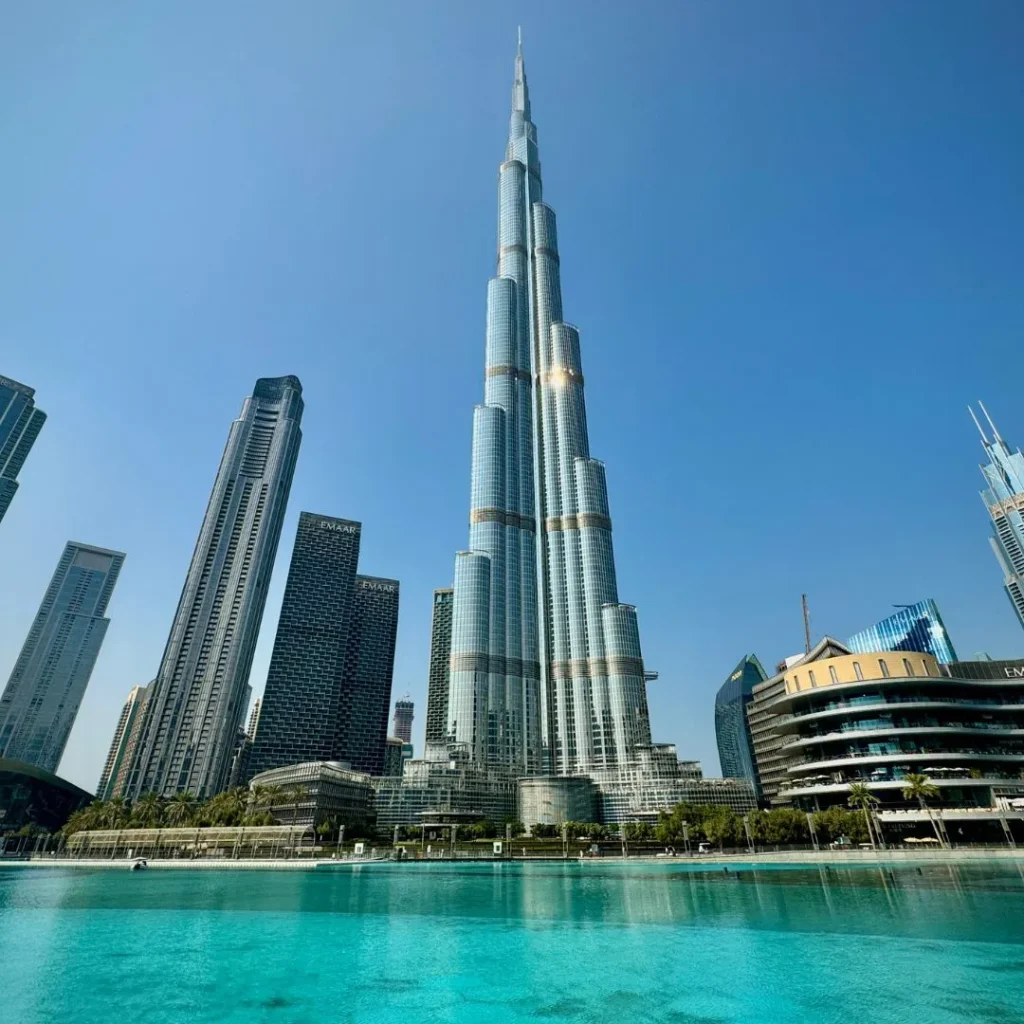
How Google AI Overviews choose which property sources to cite
Quick answer: Google AI Overviews build on Google’s core Search systems. There is no special markup or secret file for inclusion. Pages that are indexable, helpful, trustworthy and easy to extract from have the best chance of being cited.
Google has published official guidance on this. Its page on AI features and your website explains how AI Overviews and AI Mode work for site owners. In May 2026 it added a guide to optimizing for generative AI features on Google Search, which independent analysts describe as Google’s first official document on optimizing a website for generative AI features. Some agencies label this work answer engine optimization, and our comparison of AEO, GEO and traditional SEO for UAE businesses explains how the terms differ, although the practical work overlaps heavily.
Query fan-out changes what “comprehensive” means
Both AI Overviews and AI Mode may use “query fan-out”, issuing multiple related searches across subtopics and data sources to build a response. One buyer question can trigger many hidden searches.
Take the query “Is Business Bay good for investment?” An AI system may separately look for rental yields, price per square foot, developer reputations, service charges, commute times, upcoming supply and lifestyle factors. A page covering only one of these is less useful than a page covering all of them clearly.
Three practical implications
- Traditional SEO still matters. If your page can’t be crawled, indexed and ranked, it’s unlikely to be cited. Fundamentals come first.
- Cover subtopics, not just the head keyword. Build pages that answer the follow-up questions a buyer would ask.
- Make answers easy to lift. Clear headings, short direct answers, tables and labelled data are easier to extract than long, meandering prose.
Google also has a view on AI-written content. It allows AI-assisted content that is genuinely helpful, but mass-producing pages to manipulate rankings breaches its spam policies. Its page on generative AI content is worth reading before you scale up area pages.

Step 1: Build topical authority around Dubai communities
Quick answer: Create a hub-and-spoke structure with a pillar page for each major community or theme, supported by pages on specific questions. This shows search engines that your site covers Dubai property in depth.
Most property sites publish listings and a few generic blog posts. That structure gives AI systems little to cite. Structure your content around how buyers think.
A practical content architecture
- Community hubs: Downtown Dubai, Dubai Marina, Business Bay, Palm Jumeirah, Dubai Hills Estate, Jumeirah Village Circle, Dubai Creek Harbour and the like.
- Developer profiles: track record, delivered projects, handover history, payment plan styles and escrow information.
- Buying process guides: how foreign buyers purchase, mortgage basics, DLD fees, off-plan payment structures, and Golden Visa property thresholds. Always verify current rules with official sources.
- Comparison pages: off-plan vs ready, freehold vs leasehold, area vs area, apartment vs villa for a given budget.
- Market updates: monthly or quarterly commentary based on DLD data.
Link these pages together. For example, your Business Bay hub should link to related developer profiles, a “how to buy” guide and a local SEO for Dubai businesses resource so each page supports the others. Internal links help crawlers understand relationships and help users move through the buying journey.
Write for entities, not just keywords
AI systems work with entities: places, developers, projects and people. Be precise and consistent. Use the official name of each project and developer, mention neighbouring landmarks and communities, and keep names consistent across pages. Vague copy such as “a luxury lifestyle in the heart of Dubai” tells an AI system nothing it can use.

Step 2: Create content formats AI systems can cite
Quick answer: Lead each section with a 40–60 word direct answer, then add detail, data and tables. Use question-style headings that mirror how buyers search.
The answer-first pattern
For each key question, structure your content like this:
- A heading phrased as a question (for example, “Is Dubai Hills Estate a good area for families?”)
- A direct answer of 40–60 words that stands alone
- Supporting detail: figures, dates, context, caveats
- A source link where you cite data
- A clear next step, such as a viewing request or a related guide
This pattern serves human readers as well as AI. People skim, and so do AI systems looking for a passage to quote.
Content types worth building
| Content type | Example buyer query | What to include |
|---|---|---|
| Community guide | “Is Dubai Marina good for rental yield?” | Dated price-per-sq-ft range, typical yields with source, amenities, commute, service charges |
| Comparison page | “Off-plan vs ready property in Dubai” | Payment plans, escrow protections, handover risk, mortgage rules, who each suits |
| Buying process guide | “How to buy property in Dubai as a foreigner” | Eligibility, freehold areas, fees, documents, timeline, official links |
| Developer profile | “Is [developer] reliable?” | Delivered projects, handover record, escrow registration, awards, real buyer feedback |
| Market report | “Dubai property prices 2026” | DLD-based data, methodology, charts, date stamps |
Publish original data
Original insight beats generic summaries. You don’t need a research team. Analyse public DLD transaction data for one community each month, compile average price movements, or survey your own clients on why they bought. Present it in a table, name your method, and update it on a schedule. Content built on real data and real client experience tends to earn citations because AI systems have less generic material to draw from.
Keep facts fresh and dated
Dubai property data goes stale quickly. Put “Last updated” dates on market pages, state the period any figure covers, and link to the source. Different sources report different totals depending on how they define transactions, so say exactly what your number represents. For instance, the Dubai Media Office’s H1 2025 release reports figures that differ from full-year totals because they cover a different period.

Step 3: Go bilingual with real Arabic content
Quick answer: Publish native Arabic pages, not machine-translated copies. Arabic queries produce Arabic AI answers, and far fewer property brands compete in that space.
The UAE is a bilingual market, and Arabic-speaking buyers from the UAE and the wider GCC search for property in Arabic. Some marketing sources also point to a gap. Native Arabic content is described as the most under-contested generative search advantage for UAE businesses right now, because AI answer engines generate Arabic responses for Arabic queries. Treat that as a market observation rather than a guarantee, but the logic is sound, and our detailed guide to Arabic SEO in Dubai shows how less competition creates an easier path to being cited.
How to do Arabic SEO properly
- Write natively. Use a native Arabic writer or editor who knows real estate terminology. Direct translation often produces unnatural phrasing.
- Research Arabic keywords separately. Search behaviour differs by language. Don’t assume Arabic queries mirror English ones.
- Use hreflang and clean URLs. Tell Google which page serves which language and region, and make sure right-to-left layouts render correctly.
- Localise, don’t just translate. Adjust examples, cultural references and calls to action.
- Cover other buyer languages where relevant. Dubai attracts buyers from many countries, so consider Russian, Hindi, Chinese or French pages if your audience warrants them.
Step 4: Fix the technical foundation and add structured data
Quick answer: Make sure Google can crawl and render your listings, then add accurate schema markup for your organisation, listings, articles and authors. Markup must match what’s visible on the page.
Technical checklist for property websites
- Crawlability: Ensure listing and community pages are reachable through internal links, not only through JavaScript search forms.
- Rendering: Off-plan microsites built on heavy JavaScript sometimes hide content from crawlers. Test with Google Search Console’s URL Inspection tool.
- Speed and mobile experience: Most Dubai property searches happen on phones. Compress images and lazy-load galleries.
- Duplicate content: Developer brochure copy and portal-syndicated listings create duplication. Write original descriptions and use canonical tags where needed.
- Snippet controls: Directives like
nosnippetlimit what Google can show, so use them deliberately. - Clean site architecture: Use logical URLs such as
/dubai-marina/apartments-for-sale/.
Schema types to consider
Google explains structured data in its introduction to structured data. For a property brand, useful types from Schema.org include:
- Organization or RealEstateAgent, covering business name, address, logo, contact details and social profiles
- RealEstateListing, for individual property pages (see the RealEstateListing definition)
- Article with a Person author, for blog posts and market reports
- BreadcrumbList, to clarify site hierarchy
- FAQPage, for question-and-answer sections
Some caveats apply. Structured data doesn’t guarantee inclusion in AI Overviews, and Google has said there’s no special markup for them. FAQ rich results are also limited in Search these days, so treat FAQ markup as a way to make structure explicit rather than a route to a rich snippet. Only mark up what users can actually see, and validate it before publishing.
Step 5: Build trust with E-E-A-T and RERA compliance
Quick answer: Show who you are, who wrote the content, and that you’re licensed. In Dubai property, regulatory compliance is both a legal requirement and a visible trust signal.
Property is a “your money” topic: people make large financial decisions based on what they read. Google’s guidance on helpful, people-first content stresses experience, expertise, authoritativeness and trust, and our guide to E-E-A-T for UAE websites shows how to demonstrate all four in a regional context.
Trust signals that matter
- Real authors: Add bylines with photos, credentials and, for brokers, their registration details.
- Company transparency: Publish your licence details, physical address, team page and contact information.
- First-hand experience: Include real viewing notes, client stories (with permission) and site-visit photos.
- Honest claims: Avoid “guaranteed returns” and unsupported ROI promises. Cite sources for yields and price trends.
- Reviews and case studies: Encourage verified reviews and publish detailed, compliant examples.
Understand Trakheesi and RERA advertising rules
Advertising rules shape how Dubai property brands market online. A marketing permit, called the Trakheesi permit, is mandatory to publish property advertisements in Dubai, and it is required for a listing to go live on portals such as Bayut and dubizzle. Bayut’s Trakheesi guide explains how to generate a permit number. Applicants also need a marketing contract from the owner, either a Form A or a No Objection Certificate from the legal owner.
Industry guides say the requirement covers social media and other digital formats as well. One such guide states that every property advertisement, including on Instagram, Facebook, YouTube and WhatsApp, must carry a valid Trakheesi permit number, and that penalties are reported to start around AED 50,000 per offence. Treat penalty figures as indicative and confirm the current position with the Dubai Land Department or a compliance adviser. The rules for general educational content and for adverts promoting a specific property can differ, so check where your content sits.
Compliance also helps your SEO. Showing permit numbers on listing pages, keeping listings accurate and avoiding misleading claims all support the trust signals that both users and search systems reward.

Step 6: Strengthen local SEO and Google Business Profile
Quick answer: Claim and complete your Google Business Profile, keep your name, address and phone number consistent everywhere, and collect genuine reviews. Local signals help AI systems recommend you for “near me” and area-based searches.
Many property searches have a local flavour: “real estate agency in JLT” or “off-plan specialist in Dubai Marina.” To compete:
- Complete your Google Business Profile. Follow Google’s Business Profile Help guidance on categories, hours, services and photos.
- Keep NAP consistent. Your business name, address and phone number should match across your website, portals, directories and social profiles, as covered in our Dubai local SEO checklist for multi-area businesses.
- Collect reviews properly. Ask real clients and respond to every review professionally. Never buy or fake reviews.
- Build area pages with substance. A page for each community you serve should contain local knowledge, not a template with the district name swapped in.
- Use Google Posts and Q&A. Keep the profile active.
Step 7: Earn authority beyond your website
Quick answer: AI systems draw on many sources beyond your site. Mentions, reviews, portal profiles and media coverage all shape whether your brand is recommended.
Your own content is only part of the picture. To strengthen off-site signals:
- Maintain strong portal presence. Complete profiles on Bayut, Property Finder and dubizzle, with accurate listings and permit details.
- Contribute expert commentary. Offer data-backed comments to Dubai business and property media, and share original analysis that journalists can cite.
- Publish on YouTube and social channels. Community tours and market explainers extend your reach. Any content promoting specific properties must carry the required permit details.
- Build genuine partnerships. Relationships with developers, banks, mortgage brokers and relocation services create natural mentions and links.
- Monitor and correct your brand facts. Make sure descriptions of your company are accurate across directories and profiles.
Aim for quality over volume. A handful of relevant, reputable mentions does more than dozens of low-quality directory links.
Step 8: Measure your AI search performance
Quick answer: Track AI visibility with a fixed set of prompts, monitor Search Console for question-style queries, and connect everything to leads and site visits, not just rankings.
Measurement is harder because AI features don’t have a dedicated report. Google’s documentation says AI Overviews and AI Mode activity is counted within overall Search Console data, so you can’t isolate it cleanly. Many answers now end without a click, and our article on zero-click searches in the UAE explains why brand mentions and citations deserve tracking alongside traffic.
A practical measurement framework
- Build a prompt set. Write 25–40 buyer questions in English and Arabic, such as “best areas in Dubai for rental yield” or “reliable off-plan developers in Dubai.”
- Test monthly. Run the prompts in Google (including AI Overviews and AI Mode), ChatGPT, Gemini and Perplexity. Record whether your brand is mentioned, cited or linked, and who else appears.
- Use consistent conditions. Results vary by location, personalisation and time, so treat the data as directional.
- Watch Search Console. Track impressions and clicks for question-style and long-tail queries, plus branded search growth.
- Attribute leads. Add UTM parameters, ask “How did you hear about us?” on forms, and review referral traffic from AI platforms in your analytics.
- Report on outcomes. Enquiries, qualified leads, viewings booked and deals closed matter more than any visibility score.
Common mistakes Dubai property brands make
- Publishing thin, mass-produced area pages with only the district name changed
- Copying developer brochures word for word
- Leaving prices and market figures undated or outdated
- Using machine-translated Arabic with no native review
- Hiding key details in PDFs or JavaScript-only widgets
- Making unsupported investment claims, such as guaranteed returns
- Ignoring permit and compliance details on listings and ads
- Treating AI SEO as separate from SEO and neglecting technical fundamentals
- Measuring only rankings and not qualified leads
A 90-day action plan
Days 1–30: Audit and fix the base
- Audit crawlability, indexation, speed and duplicate content
- Review Google Business Profile and NAP consistency
- Identify your top 20 buyer questions in English and Arabic
- Add author bios, licence details and permit information where required
Days 31–60: Build and structure content
- Publish or upgrade 4–6 community hubs with answer-first formatting
- Create comparison and buying-process guides
- Add Organization, Article, Person and listing schema
- Commission native Arabic versions of your best pages
Days 61–90: Earn authority and measure
- Publish your first original market report based on DLD data
- Pitch expert commentary to relevant media
- Run your first AI visibility prompt test and record a baseline
- Refine content based on Search Console and lead data
Consistency matters more than speed. A steady programme of accurate, useful updates compounds over time.
Frequently asked questions
How do I get my Dubai real estate website into Google AI Overviews?
Focus on the fundamentals: crawlable pages, helpful answer-first content, accurate structured data, strong trust signals and third-party mentions. Google says there is no special AI Overviews markup, so the same quality signals that support organic ranking matter, as our Google AI Overviews guide for Dubai explains in more detail. No one can guarantee inclusion.
Is SEO still worth it for Dubai property brands now that AI search exists?
Yes. AI features build on Google’s core Search systems, so strong SEO is the foundation for visibility in both classic results and AI answers. What changes is the emphasis: more depth, clearer structure and stronger trust signals.
Does Arabic content help property websites rank in AI search?
It can. Arabic queries tend to produce Arabic answers, and fewer property brands publish high-quality native Arabic content. Native writing, separate keyword research and correct hreflang implementation are essential.
Do I need a Trakheesi permit for blog content?
Permits apply to advertisements for specific properties. Educational content that doesn’t advertise a particular property is generally treated differently, but the rules are technical. Confirm with the Dubai Land Department or a compliance adviser, and include permit numbers on any listing or promotional content.
Which schema markup should a Dubai real estate website use?
Common choices are Organization or RealEstateAgent, RealEstateListing, Article with Person authors, BreadcrumbList and FAQPage. Structured data must match visible page content and shouldn’t be treated as a guarantee of AI visibility.
How much does SEO for a Dubai real estate company cost, and how long does it take?
Cost and timing depend on competition, site health, content volume and whether you need Arabic content. Our breakdown of SEO pricing in Dubai explains typical cost drivers. Technical fixes can show effects within weeks, while authority and citations usually build over several months, so track leads as well as visibility.
Conclusion: Be the source AI systems trust
Dubai’s property market is large, competitive and increasingly researched through conversation. Winning AI search traffic means being the most useful, trustworthy and easy-to-cite source for the questions buyers ask. If you want expert help auditing your visibility, you can explore our SEO services for property brands or contact AI SEO by Abhi to discuss your market, and the same principles apply either way: build depth around communities, publish original data, go properly bilingual, get your technical and schema foundations right, stay compliant with RERA rules, and earn mentions from credible sources.